Training
Autoclave operator training
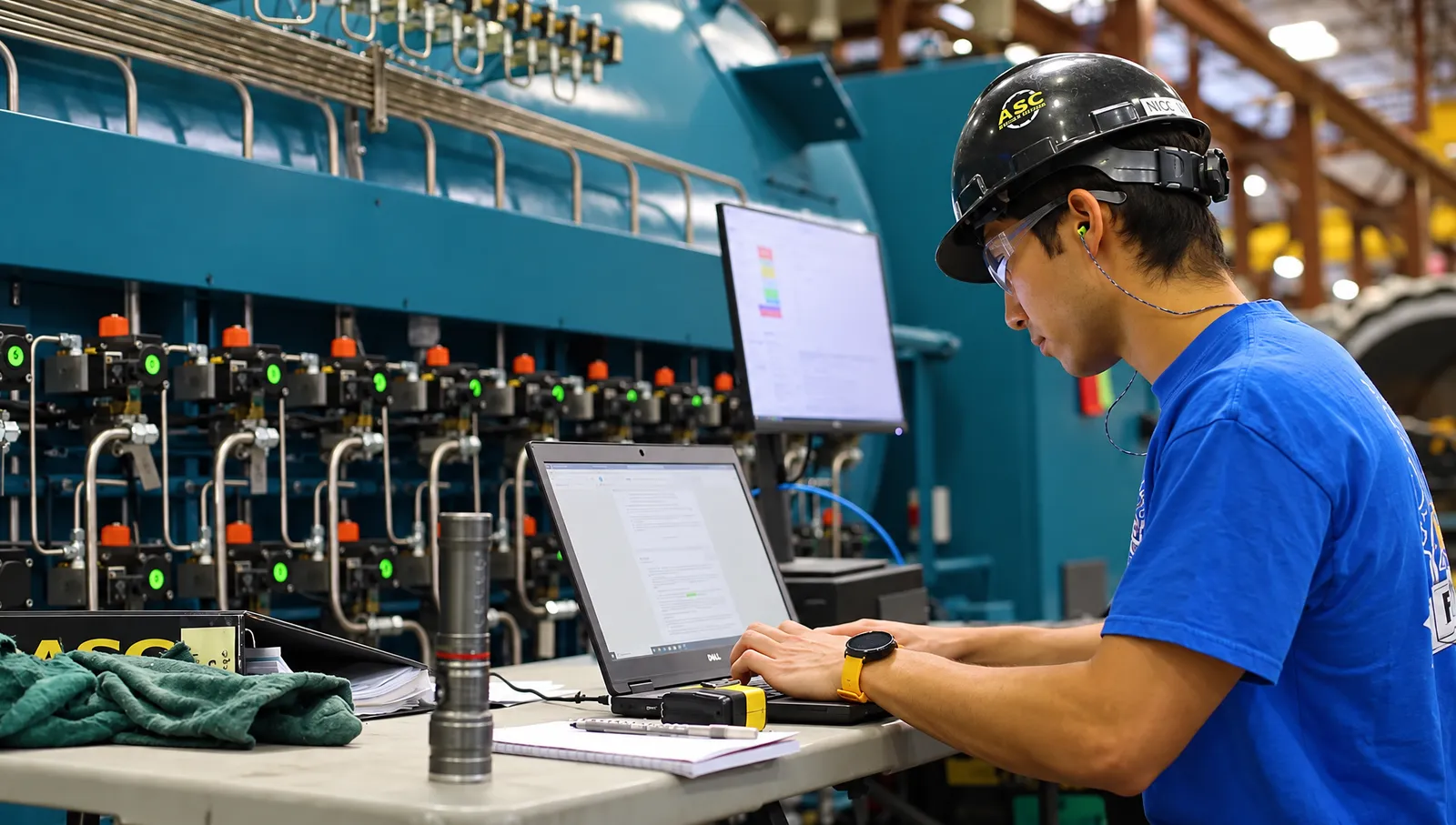
General composites training does not teach someone to run a pressure vessel. Our programme does, built around the machine you actually run.
The programme
Six modules, built around your equipment
Take the full programme or individual modules. The machine module is tailored to what is on your floor, including other manufacturers’ autoclaves and ovens.
The process
What a cure cycle does chemically and physically, why ramp rates and dwells are specified, and what goes wrong in a laminate when they are not met.
The machine
Vessel, circulation, heating, cooling, vacuum and pressurisation: what each system does and what its failure looks like from the panel.
Loading and instrumentation
Charge layout, tooling mass, thermocouple placement and bagging discipline, where most uniformity problems are created.
Running a cycle on CPC
Recipe selection and approval, the pre-run vacuum check, monitoring a live cure, responding to alarms and producing the batch record.
Safety
Pressure hazards, door interlock discipline, emergency shutdown, exotherm response and incident reporting.
Troubleshooting
The faults operators meet most, and how to tell a sensor fault from a process fault before escalating.
Safety module
What to do when a cure goes wrong at hour three
The safety module is built around the situations that actually hurt people: pressure held where it was not expected, a door approached too early, an over-temperature with a full charge inside, and an operator alone on a night shift.
- Pressure hazards: stored energy, and why a vessel is dangerous long after the heat is off
- Door interlock discipline: what the interlock proves, and what it does not
- Emergency shutdown: the difference between stopping a cycle and making a vessel safe
- Exotherm and runaway: recognising it early, and the correct response
- Near-miss reporting: why the incident nobody logged is the one that repeats
At a glance
Safety module
| Duration | 1 day |
|---|---|
| Delivery | On your site or at Poole |
| Group size | 4 to 12 |
| Prerequisites | None |
| Assessment | Written and practical |
| Certificate | Issued on completion |
Take it on its own if your team already runs the equipment, or as part of the full programme.
Why it pays
A trained operator costs less than a scrapped part
Scrapping one large aerospace part typically costs more than training the whole shift, and most failed cures we investigate failed for reasons an operator could have caught.
Fewer scrapped parts
Bagging and thermocouple discipline are learned skills, and the difference between a trained and an untrained charge shows in first-pass yield.
Faster fault resolution
An operator who can tell a sensor fault from a process fault stops the right things and calls the right people.
A defensible competence record
Customer audits and PUWER both ask who is authorised to run the equipment and how that was assessed. Certificates and assessment records answer it.
Short on time? The CPC tutorial videos cover the software interface.
Contact
Book your training
Tell us the equipment, the number of people and whether you want training on site or at Poole. We will come back with dates and a quotation.