Nuclear autoclaves
UF₆ sampling and transfer autoclaves.
Containment autoclaves that heat, sample, transfer, and sublimate UF₆ in 30B to 48Y cylinders, built to the highest safety and quality standards.
Explore the components
Why nuclear facilities choose ASC
Decades of pressure vessel and thermal processing experience
Every ASC nuclear autoclave is engineered for durability, regulatory compliance, and long-term performance in demanding nuclear processing environments.
- ASME-certified pressure vessel design and manufacturing
- Compliance with nuclear quality assurance programs, including NQA-1
- Custom configurations for facility layouts and cylinder sizes
- Engineered safety systems and containment for UF₆ handling
- Robust construction for decades of reliable operation
- Factory testing, installation support, and commissioning
- Long-term service and technical support from ASC engineers
Sampling
UF₆ sampling autoclaves
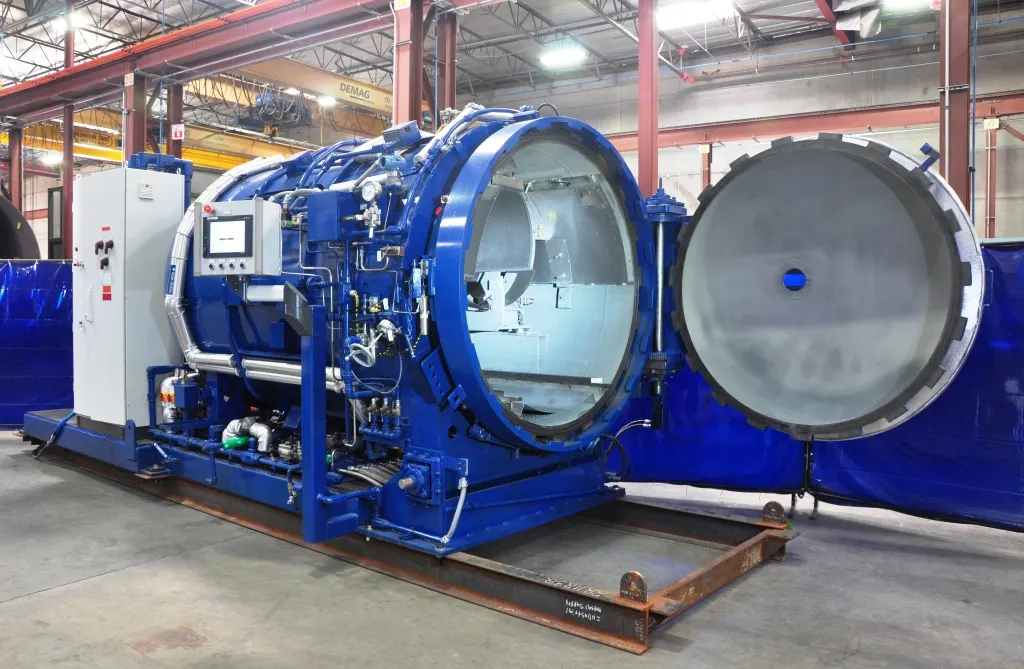
Sampling autoclaves safely melt the UF₆ inside a cylinder so representative samples can be drawn for analytical verification. Once the UF₆ is melted, the cylinder and autoclave tilt precisely to transfer a controlled quantity into sampling bottles, with full containment.
- Precision tilting for accurate, repeatable sampling
- Accepts 30B, 30C, and 48-series cylinders
- Uniform heating for a controlled phase change
- Heating, sampling, resolidification, and containment in one system
- Integrated safety interlocks and monitoring
Transfer
UF₆ transfer autoclaves
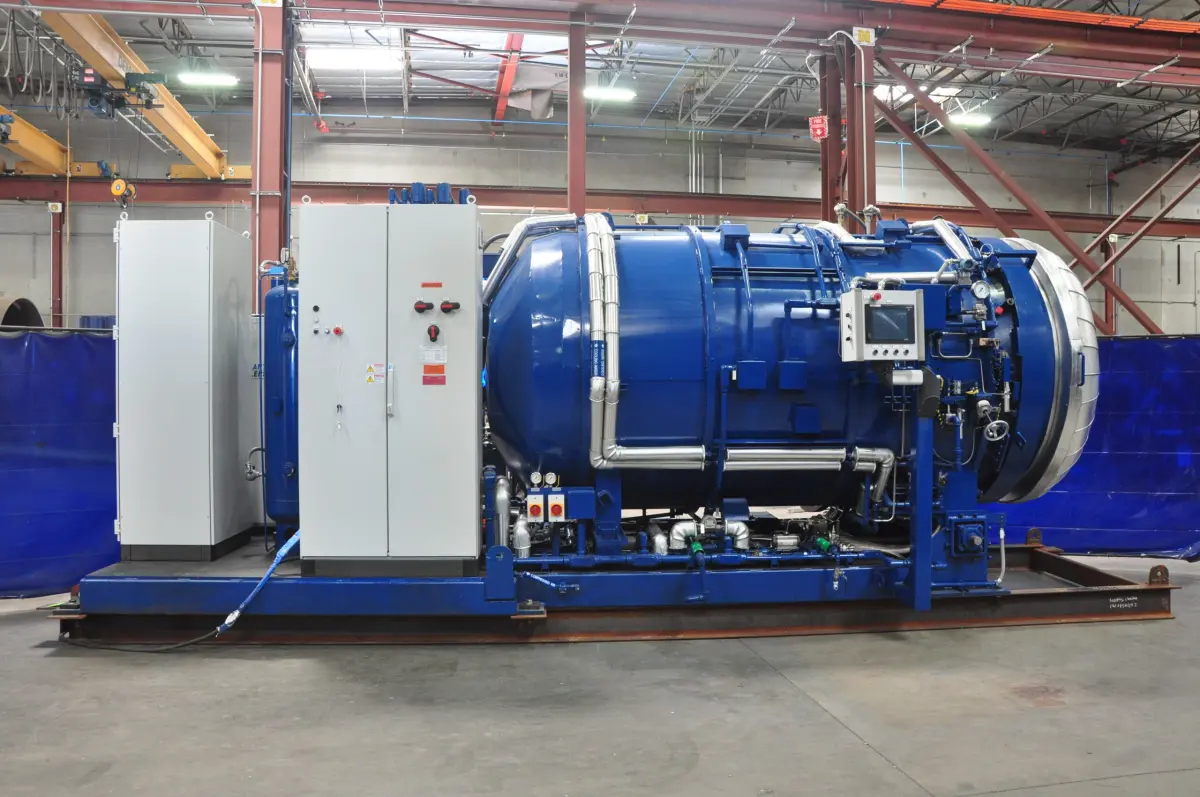
Transfer autoclaves heat solid UF₆ until it vaporizes, so it can be moved safely from storage cylinders into enrichment or downstream systems, with the consistent thermal environment efficient sublimation requires.
- Precise temperature and pressure control
- Compatible with 30B, 48F, and 48Y cylinders
- Engineered containment to prevent UF₆ release
- Integrated instrumentation and process monitoring
- Designed to integrate with enrichment and downstream systems
Sublimation
Solid to gas, without melting
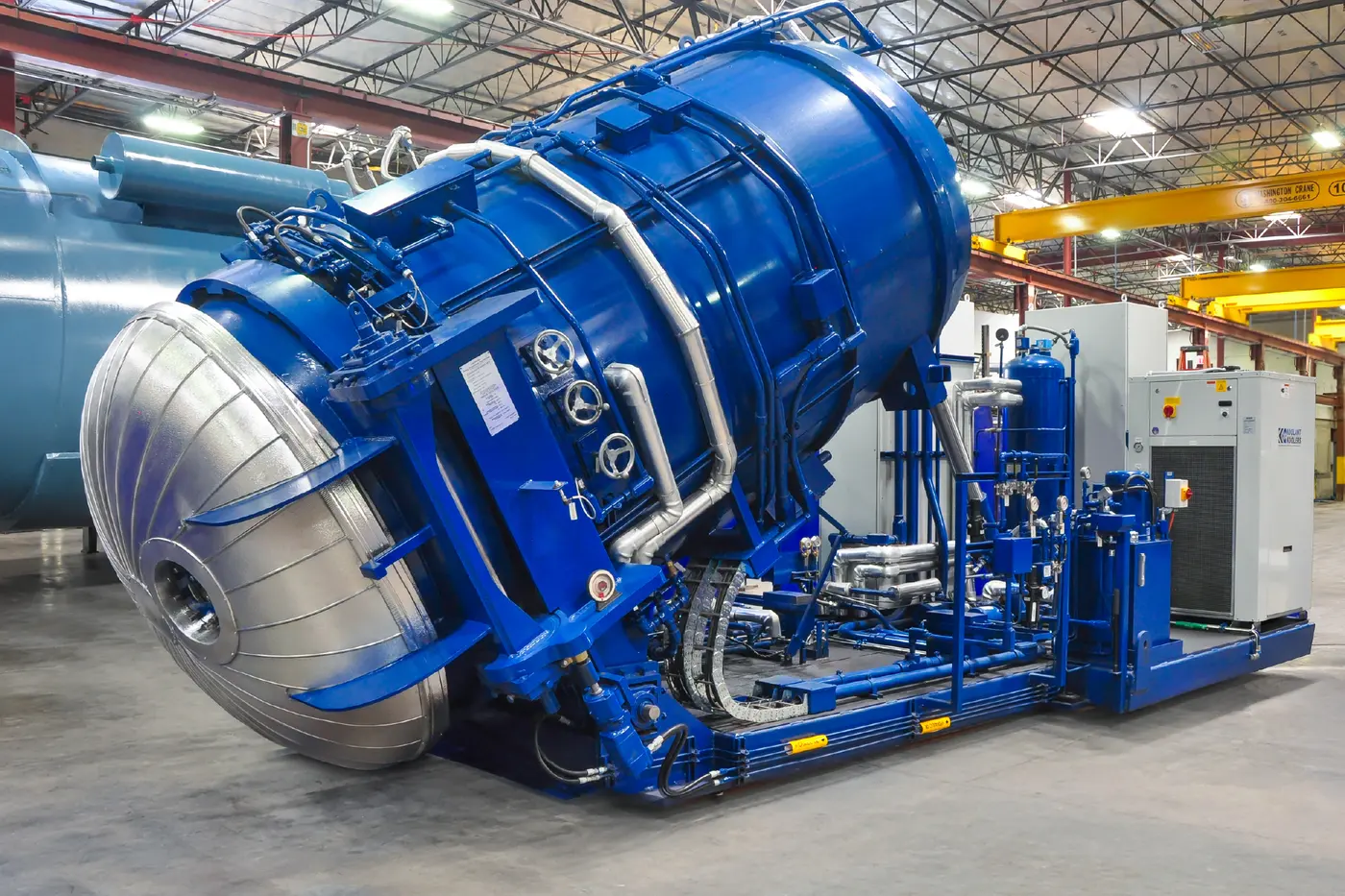
A UF₆ autoclave can also sublimate the UF₆ in a cylinder. Below its triple point, about 64 °C (147 °F) and 1.5 atm, uranium hexafluoride passes straight from solid to gas. Heating the cylinder while vapor is drawn off at low pressure turns the solid directly to gas, with no liquid UF₆ in the cylinder.
The same vessel then serves for melting and sampling, vapor transfer, and sublimation, with full containment for each.
- Lower cylinder pressure than liquid transfer
- Controlled heating rate and cylinder temperature
- Containment and interlocks throughout
Applications
Across the nuclear fuel cycle
- Heating UF₆ cylinders before enrichment processing
- Vapor transfer of UF₆ from storage cylinders to process systems
- Sublimating UF₆ straight from solid to gas, without melting
- Sampling to verify enrichment levels and material quality
- Controlled melting and resolidification of UF₆ cylinders
- Laboratory sampling and material verification
FAQ
Nuclear autoclave questions
What is a UF₆ sampling autoclave?
A UF₆ sampling autoclave melts the uranium hexafluoride inside a cylinder so a representative sample can be drawn for analysis of enrichment and product quality. The cylinder and autoclave tilt to transfer a controlled quantity into sampling bottles while maintaining full containment.
What is a UF₆ transfer autoclave?
A transfer autoclave heats solid UF₆ until it vaporizes, so the material can move safely from a storage cylinder into enrichment or downstream processing systems.
Can a UF₆ autoclave sublimate UF₆ without melting it?
Yes. With the cylinder held below UF₆'s triple point, about 64 °C and 1.5 atm, heated solid UF₆ turns directly to gas. The same autoclave that melts UF₆ for sampling can feed vapor this way, with the cylinder at low pressure and fully contained.
Which UF₆ cylinders can ASC autoclaves accept?
ASC designs for common industry cylinders, including 30B, 30C, 48F, 48Y, and other 48-series cylinders, and configures each system for the facility's cylinder sizes and layout.
Related
Nuclear equipment from ASC
Contact
Start your UF₆ project.
Our engineers can help with system sizing, cylinder compatibility, safety systems, and facility integration.