Glass industry
Autoclaves for laminated glass.
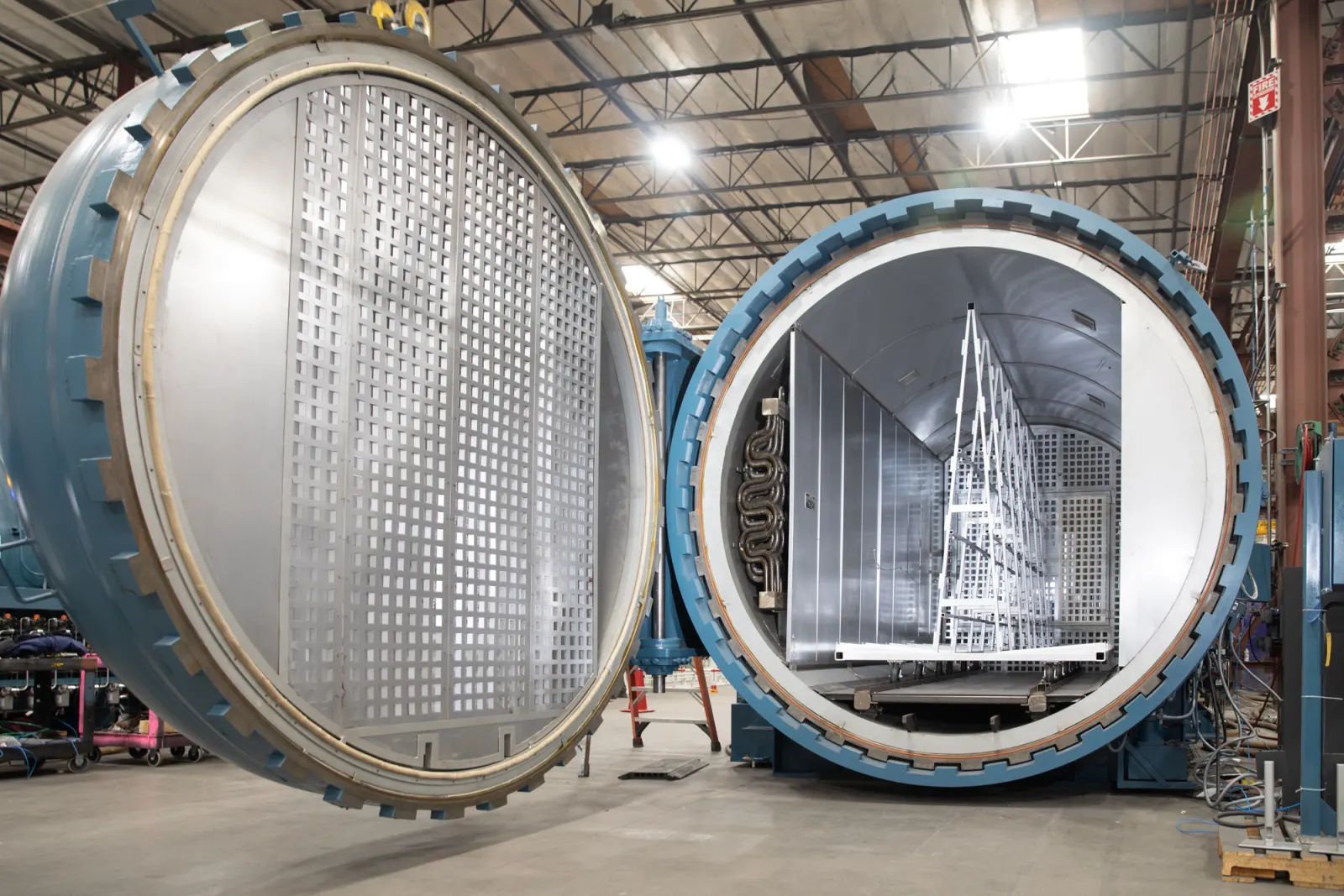
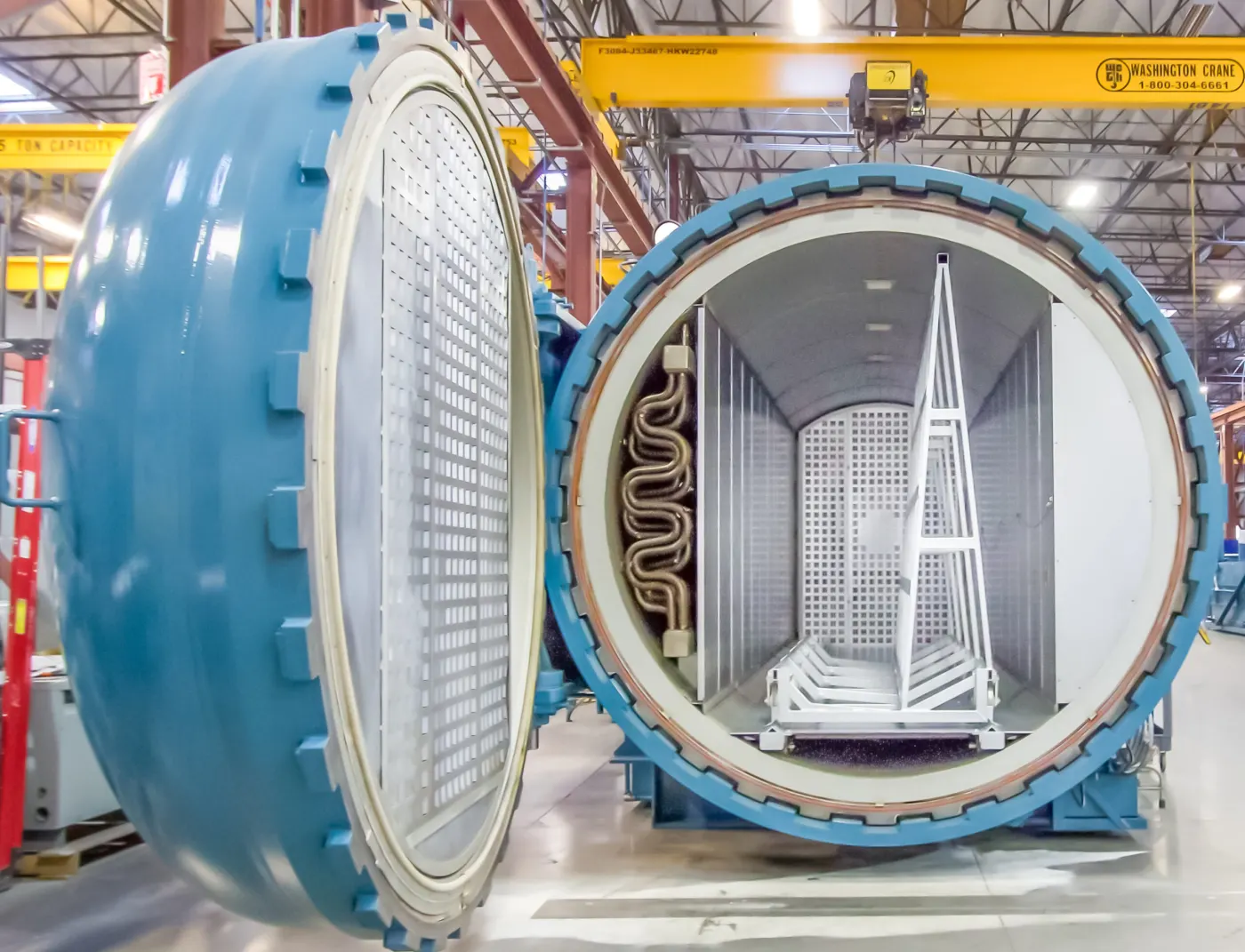
The Econoclave® GLS is the most advanced glass laminating autoclave in the world. Advanced air delivery improves heat transfer into the laminate for shorter cycles, and every unit comes with ASC's CPC control system.
Applications
Safety glass that holds together
Laminated glass bonds two or more layers of glass with an interlayer, usually polyvinyl butyral (PVB). When it breaks, the interlayer holds the pieces in place in the familiar spider-web pattern. PVB also improves sound insulation and blocks 99% of incoming UV light.
Architectural glass
Skylights, storefronts, curtain walls, and hurricane-resistant windows that stay in place when broken.
Automotive glass
Windshields and other laminated automotive glazing, including vertical-flow configurations for windshield lines.
Ballistic and armored glass
Multi-layer security and bullet-resistant glass for military and security applications.
The process
How glass is laminated in an autoclave
Float glass and PVB are assembled, then placed in the autoclave. A typical architectural lamination cycle ramps pressure to 180 psi (12.4 bar) and temperature to 280 °F (137 °C), holds for 30 to 60 minutes, then cools at a controlled rate to reduce thermal stress and cracking.
Vacuum bagging is also used to remove bubbles and improve part quality. CPC controls the whole cycle and records every run.
Econoclave GLS
More production, lower cost per load
Compressors and heating are among a laminator's largest operating costs. The GLS was designed to reduce both.
Up to 50% shorter cycles
An enhanced circulation system delivers on average 50% more airflow to the load than competing autoclaves, cutting cycle time nearly in half.
Up to 20% smaller vessel
The Econoclave design fits the same production volume in a smaller pressure vessel, reducing compressor and heating costs by as much as $100,000 a year in high-production plants.
30% less compression
ASC's optional Compression Reduction System (CRS) reuses the autoclave's compressed air between loads.
Even heating and cooling
Proprietary H-Slot™ panels create a uniform flow front from the front to the rear of the autoclave.
Flow to suit your line
Longitudinal airflow through side, top, or floor ducts, or vertical airflow top-to-bottom or bottom-to-top.
Carts built to order
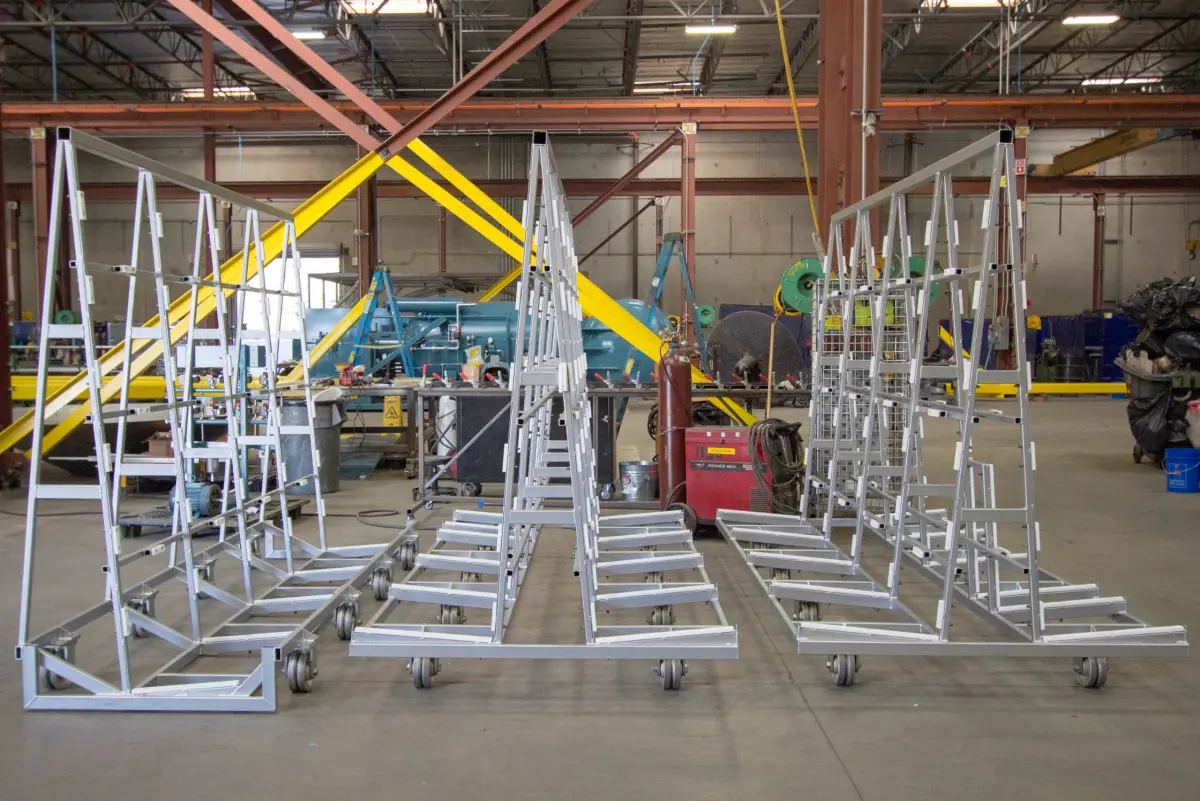
Our engineers design and our shop builds glass carts of any size to your exact requirements.
Complete systems
Autoclave, carts, and controls from one supplier
ASC engineers, fabricates, and tests the vessel, glass carts, and CPC control system together in Valencia, California, then installs and supports them at your plant. We also service and upgrade glass autoclaves built by other manufacturers.
Contact
Talk to a glass autoclave engineer.
Tell us your glass sizes, load, and cycle. We will recommend an Econoclave GLS configuration and estimate your operating savings.