Hydroclaves
Hydroclaves for high-pressure cures.
Water-pressurized autoclaves that cure composite parts at up to 1,500 psig and 400 °F, built as complete systems with CPC controls.
Explore the components
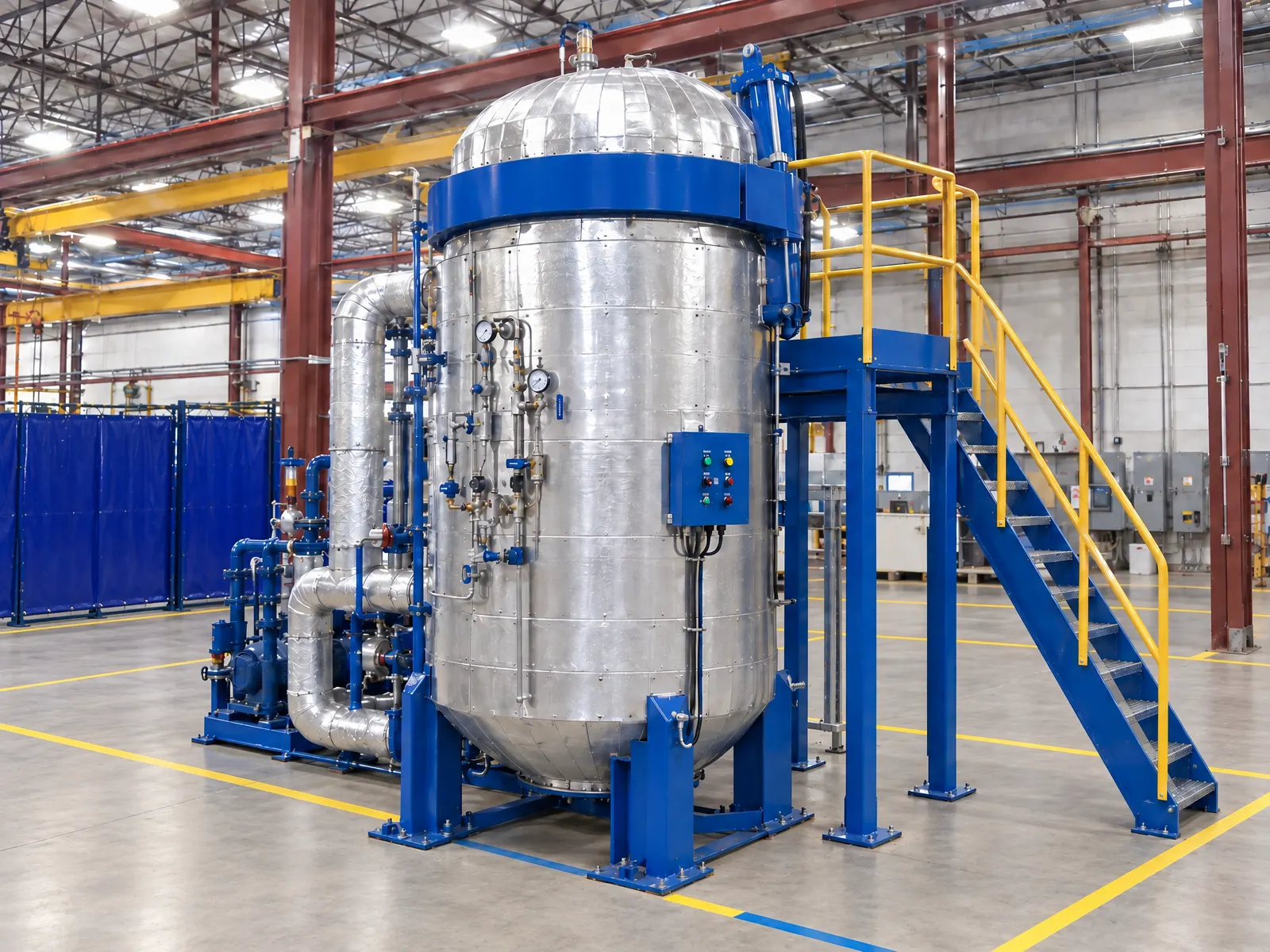
- Working pressure
- 1,500 psig
- Water temperature
- 400 °F
- Built to
- ASME VIII
Pressure without the gas
Hot water at more than 1,000 psi
A hydroclave fills the vessel with water and pressurizes it hydrostatically. Under that pressure, the water stays liquid far above its boiling point, so it heats the load quickly and evenly while pressing on every surface of the part.
Because water barely compresses, a hydroclave stores much less energy than a gas autoclave at the same pressure. That makes very high pressures practical for thick ablative and carbon composite parts such as rocket motor nozzles.
Made for propulsion parts
Rocket nozzles, insulators, and other dense composites
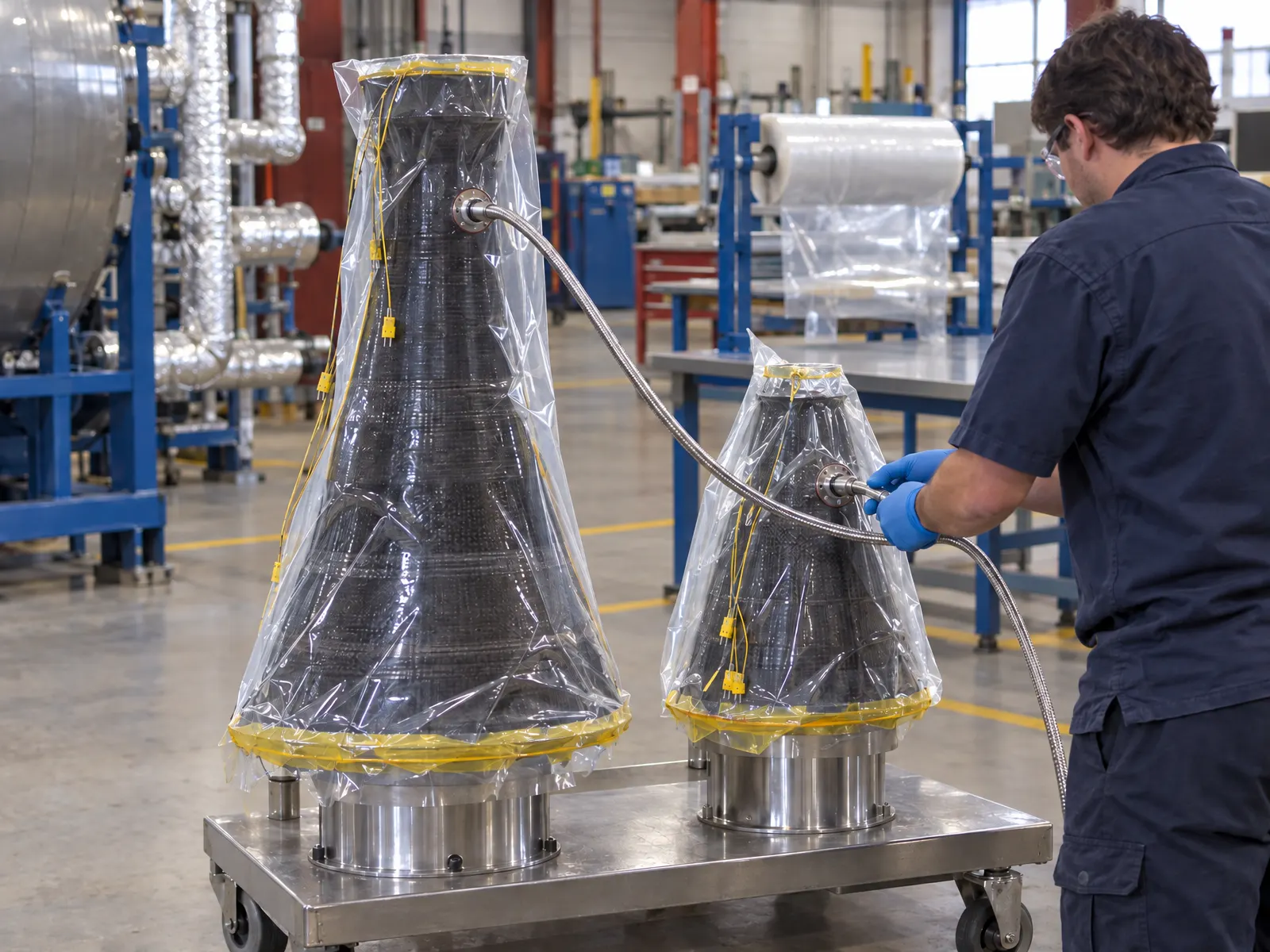
Hydroclaves cure convergent and divergent nozzle sections, insulators, and other thick ablative and carbon composite parts for defense and space propulsion. ASC designs the basket or carousel around your mandrels, with vacuum and thermocouple connections to every part.
Capabilities
A complete hydroclave system
Every hydroclave is designed around its parts, load, and cure cycle. These are typical ranges for recent ASC systems.
- Working pressure
- Up to 1,500 psig (103 bar)
- Working temperature
- Up to 400 °F (205 °C)
- Pressurization
- 50 to 150 psi/min, controlled
- Heating and cooling
- About 1 °C (2 °F) per minute
- Vessel diameter
- About 6 to 9 ft (1.8 to 2.7 m)
- Installation
- Vertical, above ground or in a pit
- Heating
- Plant steam, hot water, or electric
- Cooling
- Plant water, cooling tower, or chiller
- Vacuum and thermocouples
- Up to 20 ports each
- Code
- ASME Section VIII, Division 1
Forged clam-shell door
A forged, machined three-piece ring set clamps the door and shell flanges together hydraulically, with an o-ring seal and full circumferential capture.
Interlocked for safety
Pressure switches, mechanical lock bars, and limit switches keep the door from unlocking while the vessel holds pressure.
Redundant where it counts
Redundant circulation and pressure pumps, dual pressure transducers, and an independent high-temperature limit.
Vacuum at full pressure
Each port has high-pressure valves, a resin trap, and a transducer reading from -30 inHg to 1,500 psi, all connected without entering the vessel.
Energy-saving water handling
A warmed storage tank fills the vessel and takes the water back after each cycle, saving heat and water.
CPC controls
CPC runs pressure, temperature, and vacuum together and records every cycle for quality records.
New and replacement
New systems, new vessels, new controls
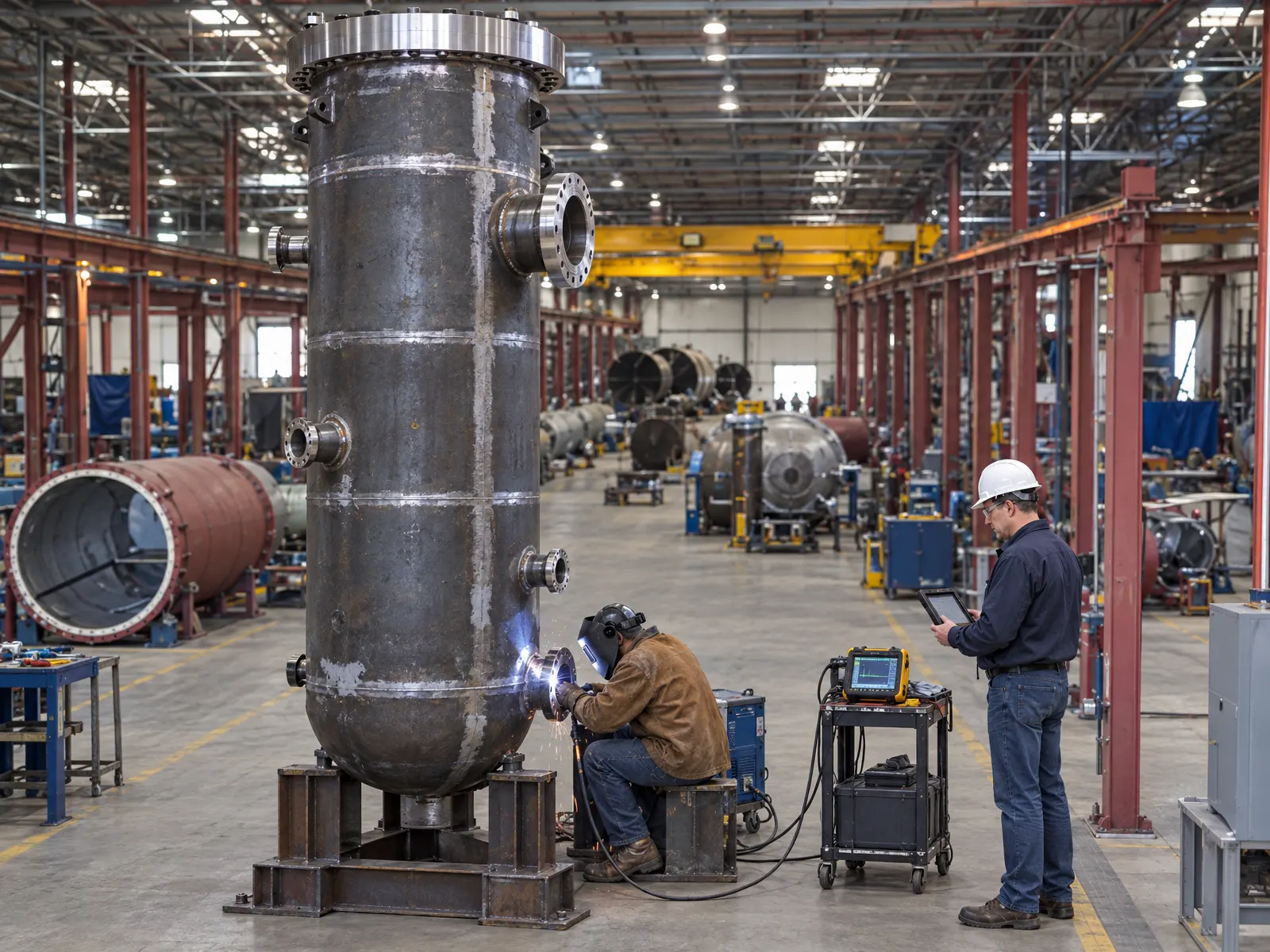
ASC supplies turnkey hydroclaves with the vessel, pumps, heat exchangers, water tank, vacuum, controls, installation, and commissioning. For plants with a hydroclave already in service, we build replacement ASME vessels to match the existing connections and tie them into the plant's heating, cooling, and water systems.
FAQ
Hydroclave questions
What is a hydroclave?
A hydroclave is an autoclave pressurized with water instead of gas. Because the water is held under high pressure, it stays liquid well above its normal boiling point, so it can heat and compress parts at once without turning to steam.
Why use water instead of gas?
Water carries heat far better than air or nitrogen and is nearly incompressible, so a hydroclave can apply very high, even pressure with much less stored energy than a gas autoclave at the same pressure. That makes it suited to thick, dense composite parts that need more than 1,000 psi.
What parts are cured in a hydroclave?
Hydroclaves are used mainly for rocket motor nozzles and other ablative or carbon composite parts for defense and space propulsion, including convergent and divergent nozzle sections and insulators.
Can ASC replace the vessel on an existing hydroclave?
Yes. ASC builds replacement ASME vessels matched to the original nozzle layout and footprint, and can tie a new system into your existing heating, cooling, and water supply. We can also retrofit the controls with CPC.
Contact
Spec your hydroclave.
Tell us your parts, load, pressure, and cure cycle. Our engineers will size a hydroclave system or a replacement vessel.