Field-built autoclaves
When it can't ship, we build it there.
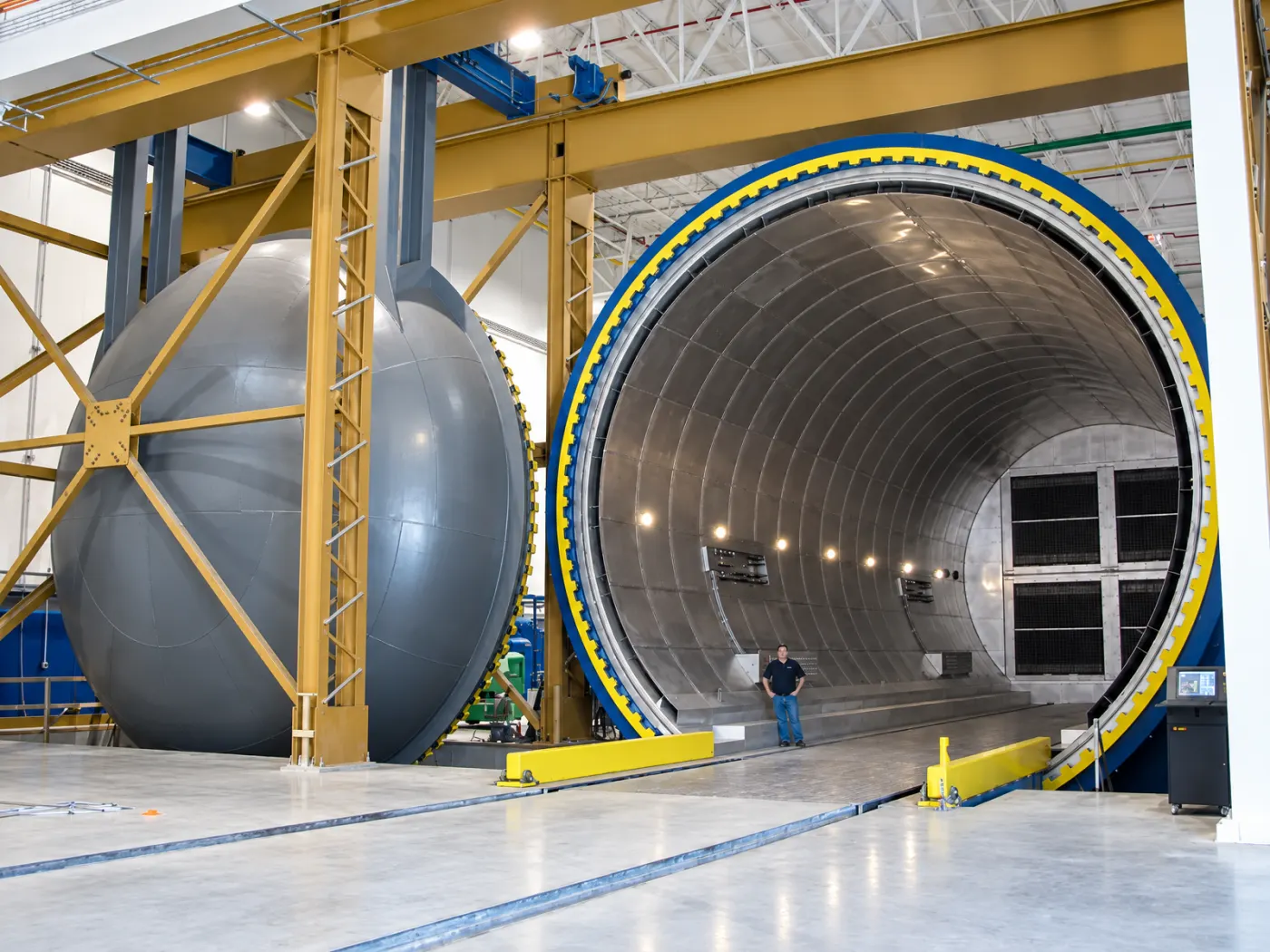
Autoclaves too large to move by truck, built entirely at the customer's site by one of the world's most experienced autoclave field fabricators.
Explore the components
Up to 32 ft diameter
Shop quality, built on site
Field-built autoclaves are designed, welded, inspected, and hydrotested to the same ASME code as the vessels we build in our shop, then finished into complete autoclaves with CPC controls.
Our largest field projects include two 28 ft × 120 ft autoclaves for Boeing's 777X wing center in Everett, Washington, and the world's largest autoclave.
The process
How a field-built autoclave comes together
Site and materials
We agree where to build: in the finished pit when the foundation is ready, otherwise on a nearby concrete pad. Heads, mill plate, and door forgings are ordered on day one. Plate takes 10 to 14 weeks, heads 14 to 20.
Shell welding
Rolled shell sections arrive on site and a small crew joins them on turning rolls, stick welding the root pass and sub-arc welding the cover passes. We tent the vessel for critical work in bad weather.
Heads and door
The rear head goes on as soon as it arrives. The machined locking-ring forgings are fitted and wedged, then the shell flange is welded to the cylinder and the front head to its flange.
Penetrations
The supervisor lays out and drills the vessel penetrations in 2 to 3 days, then nozzles, flanges, and other penetrations are welded in over 2 to 4 weeks. The vessel is set on its steel saddles.
Inspection and hydrotest
After x-ray inspection and heat treating, the vessel is filled with water and pressurized to 130% of maximum design pressure, witnessed by an authorized inspector who signs the ASME U-1A data report.
Autoclave build
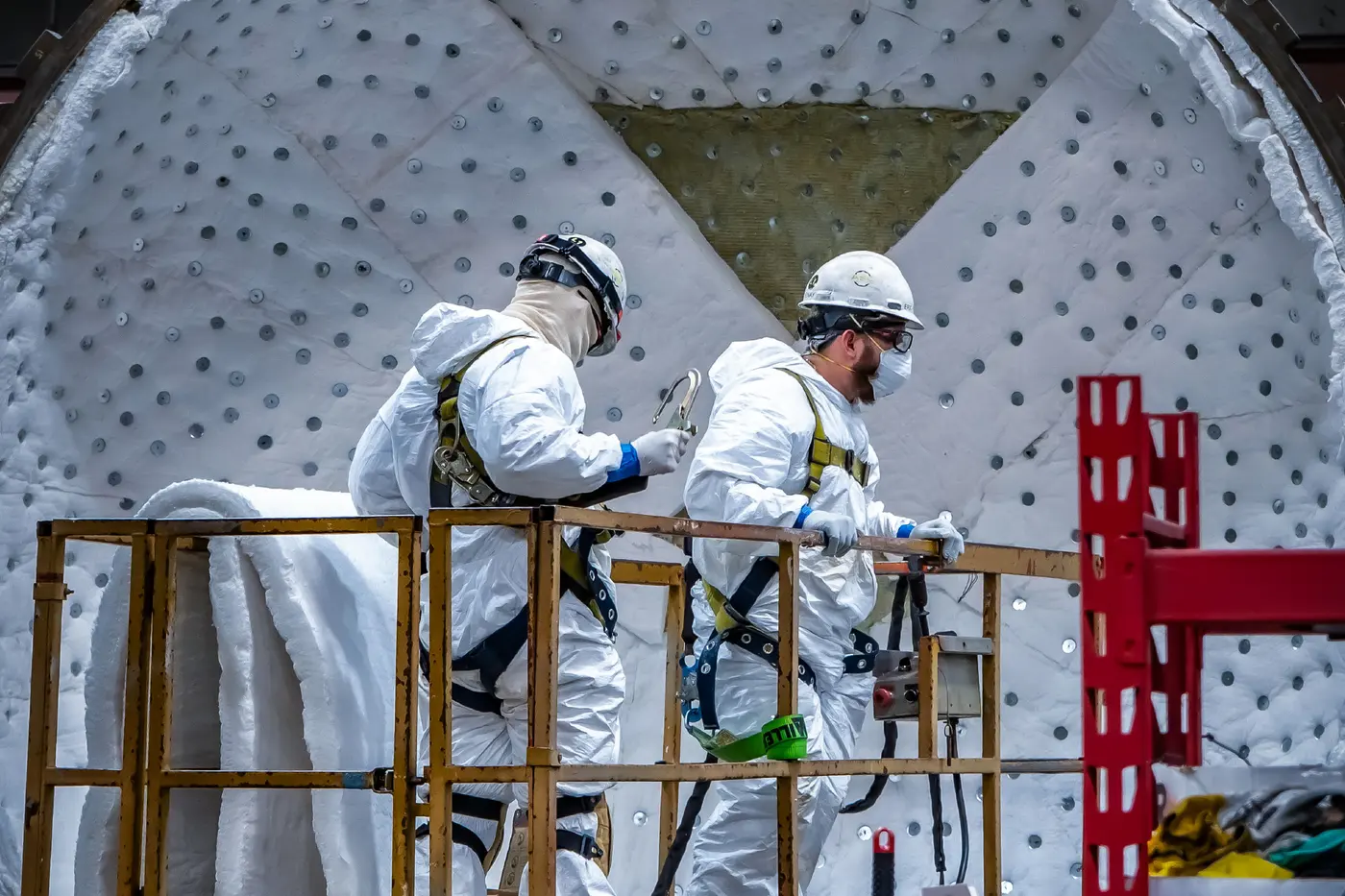
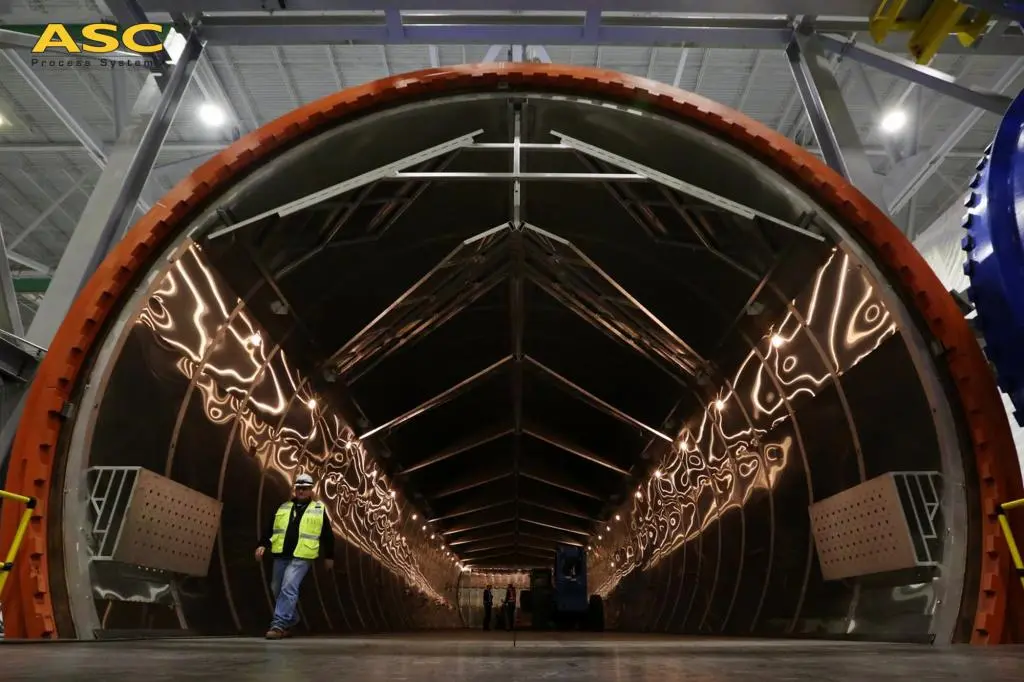
The site crew grows to 15 to 25 people to install insulation, liner, floor, fan assembly, and door gantry, and the finished vessel is rigged into its pit and commissioned.
FAQ
Field fabrication questions
When does field fabrication make sense?
Once an autoclave's internal diameter exceeds about 12 ft (3.6 m), shipping it across the country becomes very expensive. ASC runs a cost-benefit analysis on each project, because field work is inherently less efficient than shop work and weather has to be weighed in.
How long does a field-built autoclave take?
From 50 to 90 weeks to turnover, depending on the size and complexity of the autoclave and on current lead times for steel plate, heads, and forgings.
How large can ASC build in the field?
Up to 32 ft in diameter and hundreds of feet long. In our own shop we build vessels up to 17 ft in diameter and 150 ft long.
Contact
Talk through a large build.
Share the diameter, length, and site. We will weigh shop and field fabrication and recommend the better value.