Composites autoclaves
Composite curing and bonding autoclaves.
Aerospace-grade autoclaves for carbon fiber and other composite parts, used by leading aerospace, defense, and armor manufacturers worldwide.
Explore the components
Built for flight-critical parts
What goes into a composite autoclave
Autoclaves for composite bonding in aerospace and defense must be built with more care than autoclaves for vulcanizing, wood treatment, or concrete. Most of what they cure ends up on the aircraft we fly on and the equipment that protects our troops.
ASC built its first aerospace autoclave in 1989 and has worked with customers including Boeing, ATK, GKN, Lockheed Martin, Northrop Grumman, and Vought to co-develop autoclave and control technology. That work became the Econoclave®, now the standard in composite processing worldwide.
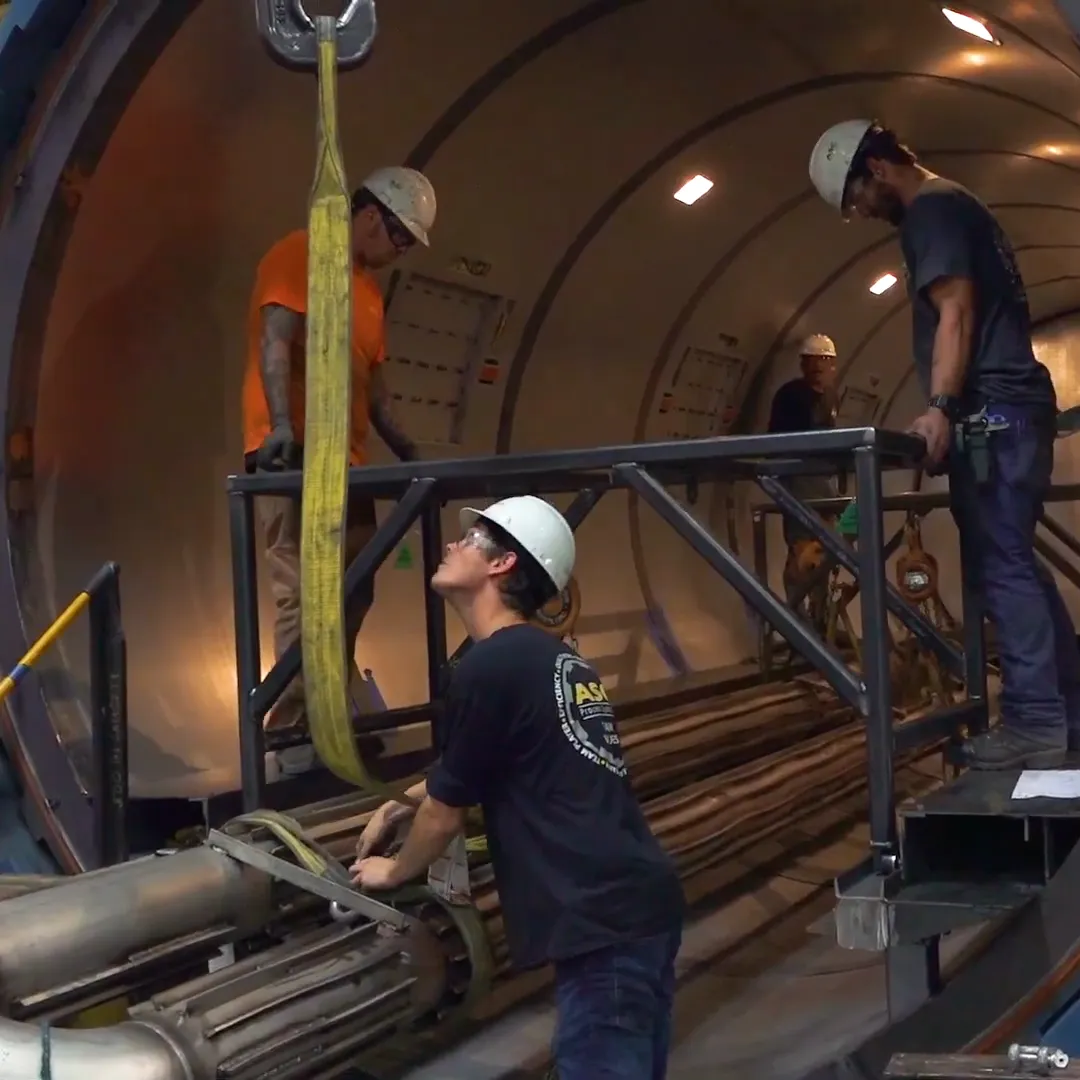
What makes us different
Better parts from every cure cycle
Temperature uniformity
With composite materials and tooling this expensive, uniformity matters. ASC's H-Slot panels give predictable, adjustable airflow from the front to the rear of every standard and custom Econoclave.
Faster cure cycles
Cycle time depends on how fast the autoclave moves heat into the part and tool load. High air speed and uniform flow shorten each production load.
Vacuum to every part
Part quality depends on the vacuum each bagged part receives. The Econoclave monitors and controls vacuum at every port and runs automatic leak tests before and during the cure.
Pre-run integrity checks
CPC's integrity checks verify the part entries, sensors, vacuum headers, and part connections before the run starts, lowering the risk to an expensive load.
Internally insulated
Insulation keeps heat off the vessel wall, giving a more controllable environment and better performance during heat-up and cool-down.
A permanent record
Each leak test generates a report that becomes part of the run's permanent data record, alongside CPC's cure data and reporting.
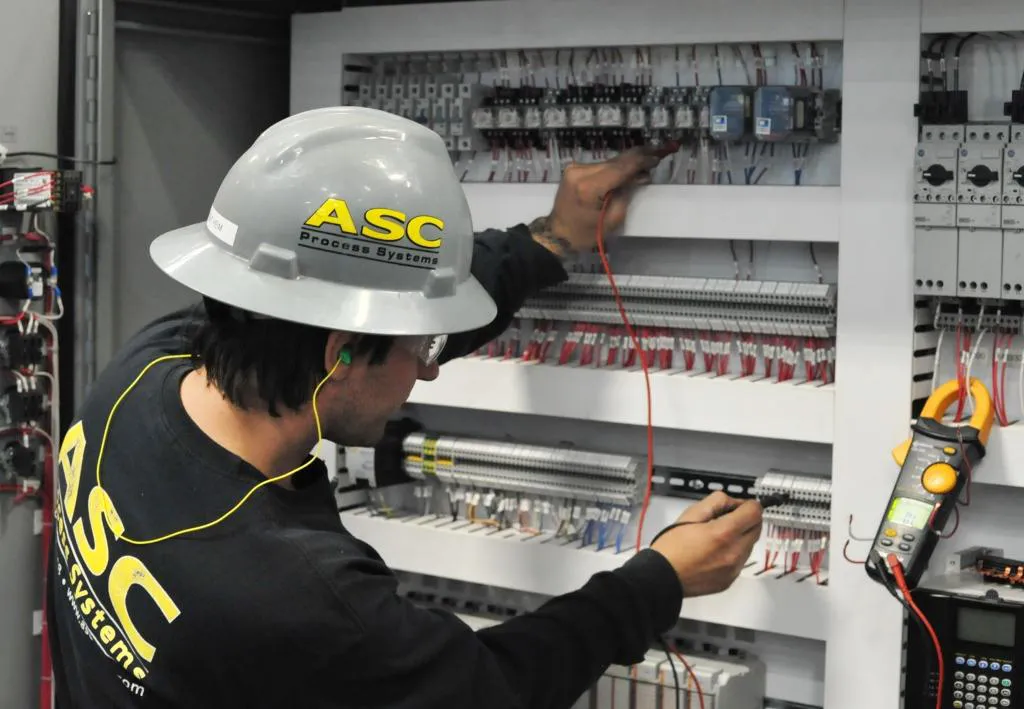
CPC controls
Controlled by the cure recipe, verified by the part
Every ASC composite autoclave comes with CPC (Composite Processing Control). CPC controls temperature, pressure, vacuum, and cure time from engineered recipes, using readings from thermocouples and vacuum transducers attached directly to the parts and tools.
Created in 1988 and updated every year since, CPC is the world's leading control system for composite autoclaves, with more than 1,500 users.
Specifications and certifications
Experts in aerospace cure specifications
We design to the details of aerospace composite curing specifications, including Boeing's autoclave qualification specification D6-49327 and AMS 2750 pyrometry, and to each customer's own process and operating specifications.
- ASME Section VIII, Division 1 “U” stamp and National Board “R” stamp
- ISO 9001:2015 quality management
- UL-certified industrial control panels
- PED, China, and South Korea pressure vessel certifications
FAQ
Composite autoclave questions
What is a composite autoclave?
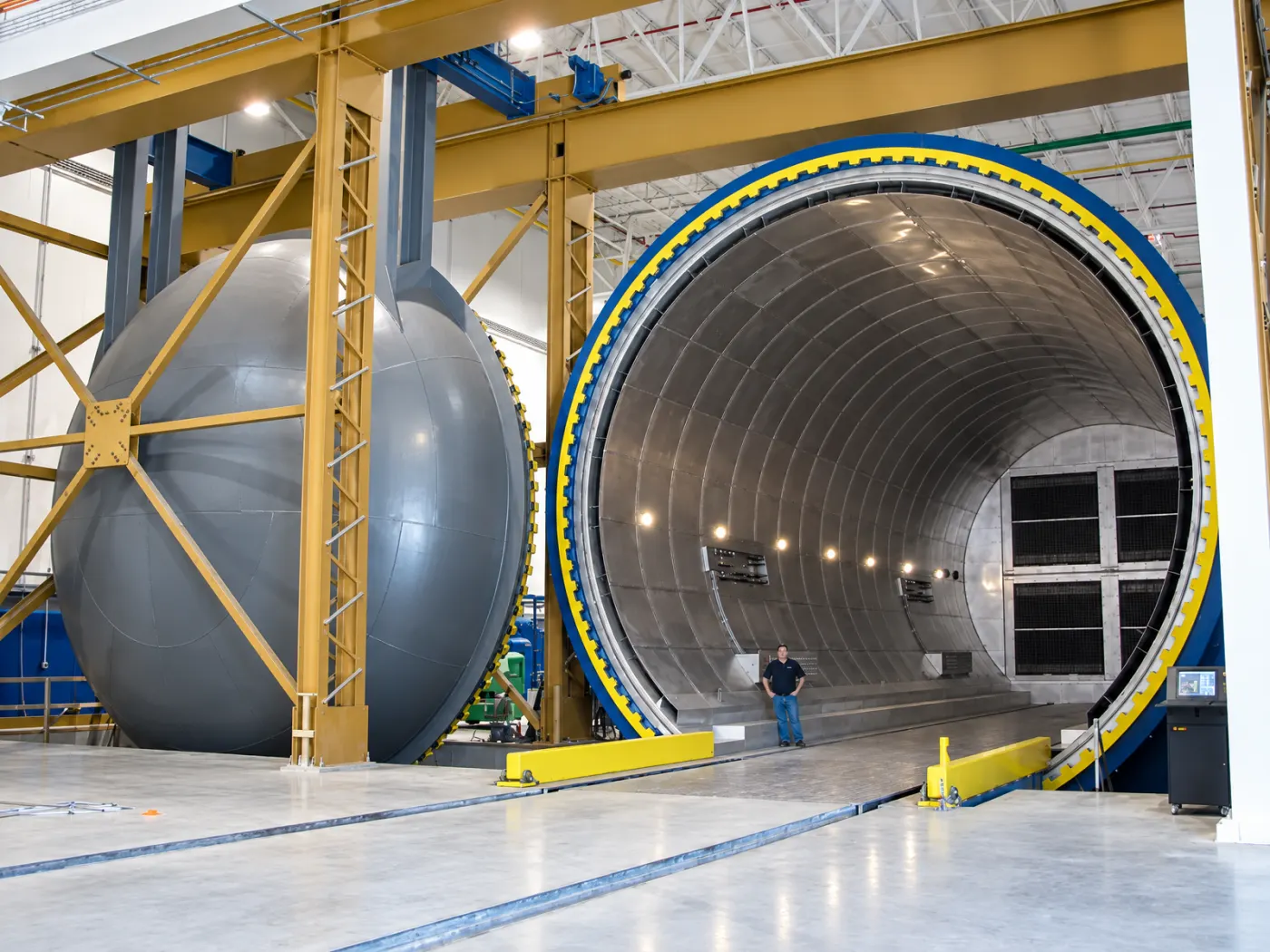
A composite autoclave is a heated pressure vessel used to cure and bond composite parts. Heat cures the resin while pressure and vacuum consolidate the laminate and remove voids, producing the strength and consistency aerospace and defense parts require.
Can ASC autoclaves cure carbon fiber (CFRP) parts?
Yes. Carbon fiber prepreg and other CFRP parts are the main work of ASC composite autoclaves, along with composite bonding and ballistic armor.
What specifications can an ASC composite autoclave meet?
ASC designs autoclaves to customer and industry cure specifications, including Boeing's autoclave qualification specification D6-49327 and AMS 2750 pyrometry, and builds vessels to ASME Section VIII, Division 1, PED, and other pressure codes.
How is a composite curing autoclave different from other autoclaves?
Composite autoclaves are built to a higher standard than autoclaves for rubber, wood, or concrete, because their parts end up in aircraft and military equipment. They are internally insulated and need tighter temperature uniformity, vacuum control, and data recording.
Related
Find the right composite autoclave
Contact
Spec your composite autoclave.
Tell us your part size, materials, and cure specification. An ASC engineer will recommend a standard model or a custom design.