Composite Processing Control
What is CPC?
CPC (Composite Processing Control) is ASC's flagship software and control system for composite processes in autoclaves, ovens, presses, formers, and bond tools. It has been at the forefront of composite technology since 1988.
CPC today
The standard for autoclave and oven control
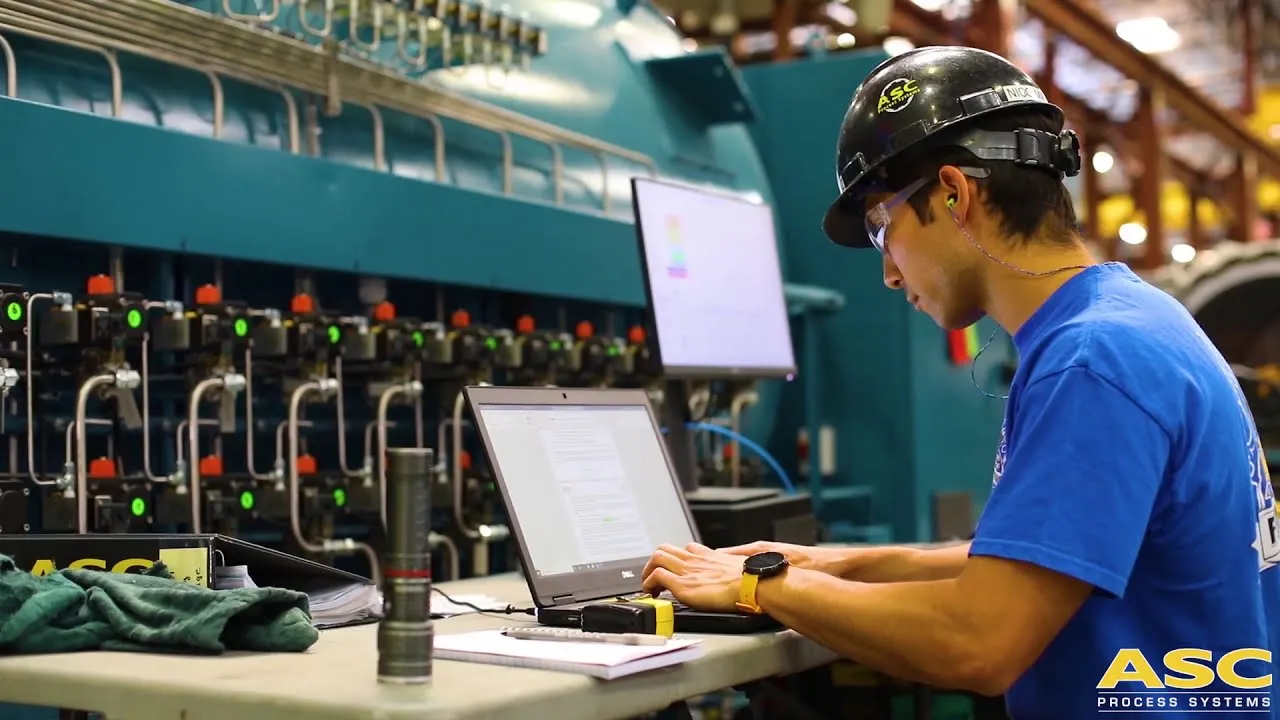
CPC has grown over more than three decades into the leading control system for autoclaves and ovens. Most Tier 1, 2, and 3 aerospace companies standardize on it, and more than 1,500 pieces of equipment run on CPC every day. That is billions of dollars of composite parts cured each year.
We listen closely to our customers, so CPC has grown into a large package with hundreds of features the industry requires, and we keep improving it with them.
Architecture
Built to never stop a cure
Client-server reliability
CPC is built and tested to strict up-time specifications. Many systems have run multiple pieces of equipment for decades without a major incident.
Multi-equipment control
One PC, or a dual-PC system, can run up to 20 autoclaves, ovens, presses, and other equipment at once, lowering the cost per machine.
100% redundancy
In a CPC Level II system, a backup PC takes over bumplessly if the primary fails, with a complete copy of the run data.
Network viewing and control
Up to 20 operators, engineers, QA staff, and managers can view and operate the process at the same time from their own PCs.
Expandable
Add equipment year after year to the same system instead of buying another one.
Easy to use
Screens are designed for operator efficiency, and software operations are kept fast to reduce equipment cycle time.
Process and quality
Better parts, proven by the data
Advanced cure control
Recipe control, control by part temperature, part gradient, or load gradient, exotherm control, pro-active control, and material modeling of viscosity, Tg, and other properties.
Automatic quality analysis
Quality cards written by your quality engineers scan run and part data after each cure to confirm compliance. Different parts in the same run can be bought off with different cards.
Comprehensive reporting
Query runs from the database and produce trend plots, numeric logs, quality reports, pass/fail reports, and message logs, with zoom and pan on screen.
Configurable screens
A built-in screen builder lets ASC engineers and customers tailor the system. Additional screens requested at installation are free.
Maintenance multimedia
Drill-down images of every valve and motor, calibration and maintenance videos, part pictures and diagrams, and links to documentation.
Always current
CPC is maintained and updated regularly with the features our users ask for. Our customers are our partners in its development.
FAQ
CPC questions
What does CPC stand for?
CPC stands for Composite Processing Control. It is ASC Process Systems' software and control system for composite processes in autoclaves, ovens, presses, formers, and bond tools.
How many systems use CPC?
More than 1,500 pieces of equipment are controlled by CPC every day, and most Tier 1, 2, and 3 aerospace suppliers standardize their controls on it.
Can CPC control equipment made by other manufacturers?
Yes. ASC retrofits CPC onto autoclaves, ovens, and presses from many other manufacturers, and more than 30 autoclaves are upgraded each year.
What is a CPC Level II system?
A CPC Level II system uses two PCs for primary and backup control. If the primary PC fails, the backup takes over the run without interruption and keeps a complete copy of the data.
Contact
Put CPC on your equipment.
Tell us about the equipment you want to control. Our control sales engineer will scope a new system or a retrofit.